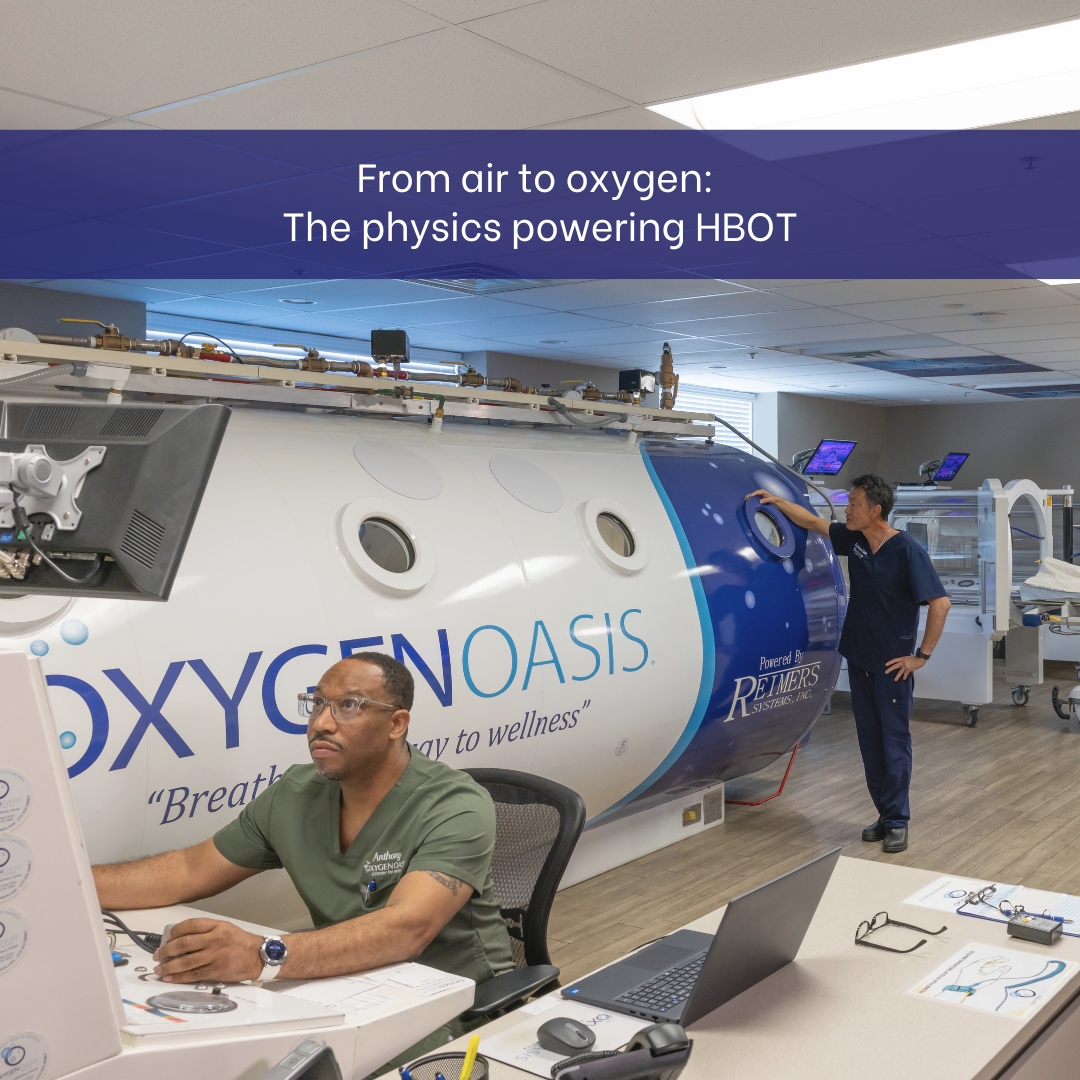
From Air to Oxygen: The Physics Behind Hyperbaric Oxygen Therapy and Carbon Monoxide Recovery
Hyperbaric Oxygen Therapy (HBOT) is more than just breathing oxygen—it’s a powerful medical treatment rooted in physics that can be life-saving, especially in cases of carbon monoxide (CO) poisoning. Understanding how it works can help patients appreciate why it’s such an important intervention.
The Physics Behind HBOT
At its core, HBOT relies on two key gas laws: Boyle’s Law and Henry’s Law.
- Boyle’s Law states that as pressure increases, gas volume decreases. Inside a hyperbaric chamber, increased pressure compresses gases in the body, improving circulation and reducing harmful gas bubbles.
- Henry’s Law explains that higher pressure allows more gas to dissolve in a liquid. In HBOT, this means significantly more oxygen dissolves directly into the blood plasma—not just carried by red blood cells.
Under normal conditions, oxygen is primarily transported by hemoglobin. But in a hyperbaric environment, oxygen dissolves into plasma at levels high enough to supply tissues even when hemoglobin is impaired.
What Happens in Carbon Monoxide Poisoning
Carbon monoxide is a dangerous, odorless gas that binds to hemoglobin over 200 times more strongly than oxygen. This prevents oxygen from reaching vital organs like the brain and heart.
As CO builds up in the bloodstream:
- Oxygen delivery drops dramatically
- Cells become starved of oxygen (hypoxia)
- Serious complications, including brain injury and death, can occur
Even after removal from the source, CO can remain bound to hemoglobin for hours, continuing to cause damage.
How HBOT Helps Treat CO Poisoning
HBOT is one of the most effective treatments for carbon monoxide poisoning because it works in multiple ways:
- Rapid CO Elimination
HBOT significantly reduces the half-life of carbon monoxide in the blood—from several hours to under 30 minutes. - Restores Oxygen Delivery
The high-pressure oxygen environment forces large amounts of oxygen into the plasma, ensuring tissues receive the oxygen they need—even while hemoglobin is still compromised. - Reduces Inflammation and Brain Injury
HBOT helps limit the delayed neurological effects often seen after CO poisoning, such as memory loss or cognitive impairment.
What Patients Should Expect
During HBOT, patients lie comfortably in a chamber while breathing 100% oxygen at increased pressure. Sessions typically last 60–90 minutes, and multiple treatments may be recommended depending on severity.
Most patients tolerate HBOT well, with minimal side effects. Some may experience mild ear pressure, similar to changes felt during air travel.
The Bottom Line
HBOT transforms something as simple as oxygen into a powerful therapeutic tool by leveraging basic physics. In the case of carbon monoxide poisoning, this treatment can be life-saving, accelerating recovery and protecting the brain and vital organs.
If you or someone you know may have been exposed to carbon monoxide, seek emergency care immediately—early treatment, including HBOT, can make all the difference.