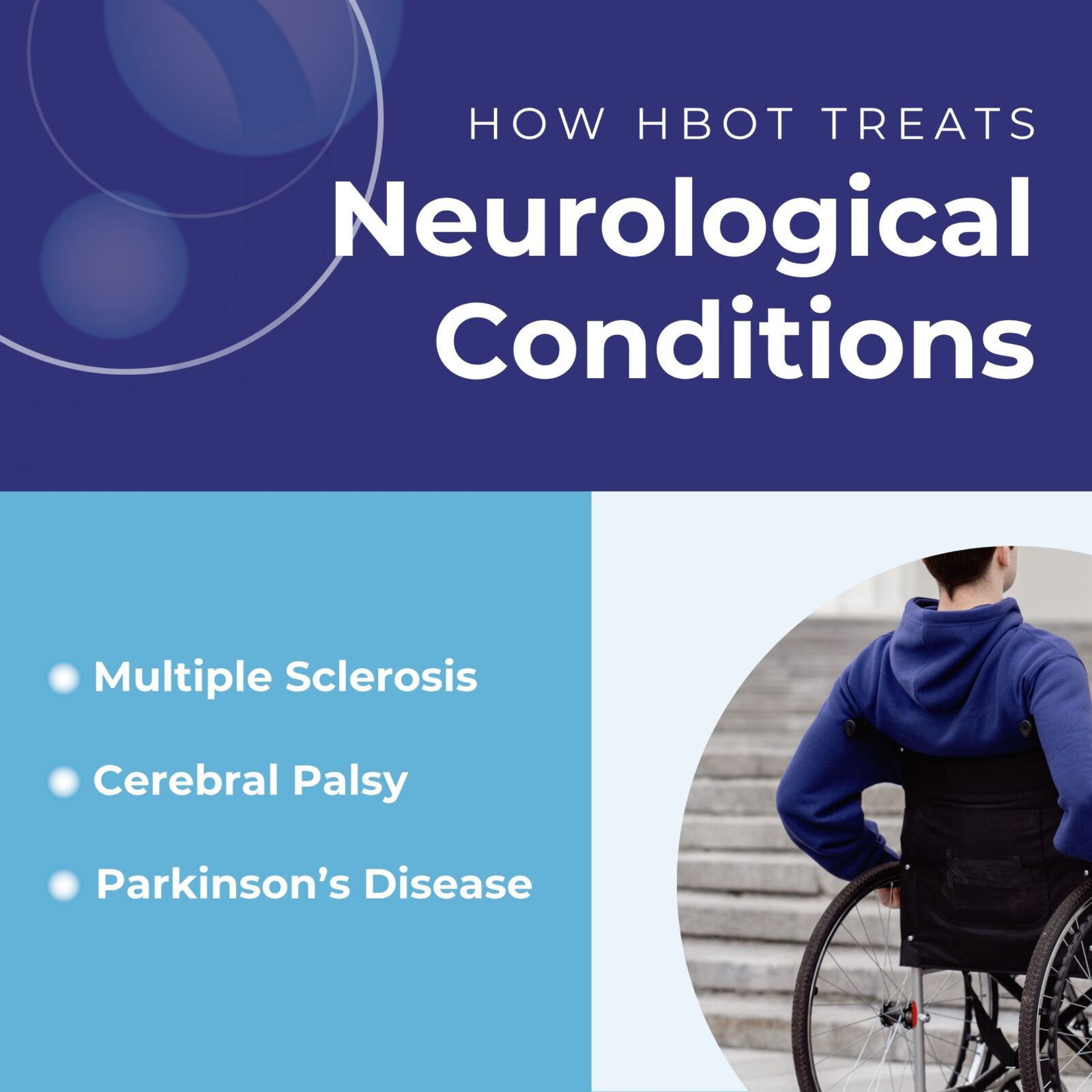
Healing the Brain with Oxygen – Hyperbaric Oxygen Therapy for Multiple Sclerosis, Cerebral Palsy, and Parkinson’s Disease
Hyperbaric Oxygen Therapy (HBOT), a medical treatment that involves breathing pure oxygen in a pressurized chamber, is increasingly gaining attention for its potential to support neurological recovery. While it’s well-established for conditions like wound healing and carbon monoxide poisoning, researchers are now exploring how HBOT may benefit patients with neurological disorders such as Multiple Sclerosis (MS), Cerebral Palsy (CP), and Parkinson’s Disease (PD).
Understanding the Science Behind HBOT
In an HBOT chamber, oxygen is delivered at pressures higher than atmospheric levels, allowing more oxygen to dissolve into the bloodstream and reach damaged tissues—including the brain. Oxygen is vital for cell repair, reducing inflammation, and promoting the regeneration of nerve tissue.
Studies suggest HBOT can:
- Increase oxygen delivery to hypoxic (oxygen-starved) brain tissue
- Reduce inflammation and oxidative stress
- Promote neuroplasticity and stem cell activity
- Improve mitochondrial function and blood flow
These effects make HBOT a promising adjunct therapy for neurological conditions marked by chronic inflammation, degeneration, or traumatic injury to the nervous system.
HBOT and Multiple Sclerosis (MS)
Multiple Sclerosis is a chronic autoimmune disorder where the immune system attacks the protective myelin sheath around nerves. This leads to disrupted communication between the brain and body.
Some clinical studies have shown that HBOT may help reduce fatigue and improve mobility in MS patients. It may also enhance quality of life by slowing progression and reducing relapses. While results are mixed and not yet conclusive across all studies, many patients report subjective improvement after HBOT sessions.
HBOT and Cerebral Palsy (CP)
Cerebral Palsy is a group of disorders affecting movement, posture, and coordination, often caused by a lack of oxygen to the brain at or around birth.
Several studies and anecdotal reports suggest that HBOT can improve motor function, speech, and cognitive development in children with CP. HBOT may reduce inflammation and stimulate dormant neurons, helping the brain “rewire” itself—especially when combined with traditional therapies like physical or occupational therapy.
HBOT and Parkinson’s Disease (PD)
Parkinson’s Disease is a neurodegenerative disorder characterized by the progressive loss of dopamine-producing neurons in the brain.
While research is still in early stages, preliminary animal and human studies suggest HBOT may help by:
- Improving mitochondrial function
- Reducing oxidative stress
- Enhancing neurogenesis (growth of new nerve cells)
- Protecting neurons from further degeneration
Some Parkinson’s patients have reported improvements in tremors, motor control, and cognitive clarity following HBOT.
Final Thoughts: A Complementary Option Worth Exploring
While HBOT is not a cure for MS, CP, or Parkinson’s Disease, it may offer supportive benefits that enhance traditional treatment plans. Ongoing clinical trials and research continue to investigate HBOT’s full potential, but for many patients, it already represents a hopeful and non-invasive path toward improved neurological health.